
10 Common Myths About Therapy: Debunking the Stigma
In our rapidly evolving technical world, where knowledge is instantly accessible, it’s surprising to discover that many myths about therapy still prevail, especially regarding mental health. Our psychological well-being is fundamental to our daily lives, shaping our emotions, perspectives, and social interactions. These myths about therapy can perpetuate stigma, and sometimes they can create a culture of fear that often prevents people from reaching out for support.
Let’s take a closer look at the specific myths about therapy that often cloud our view of professional treatment:
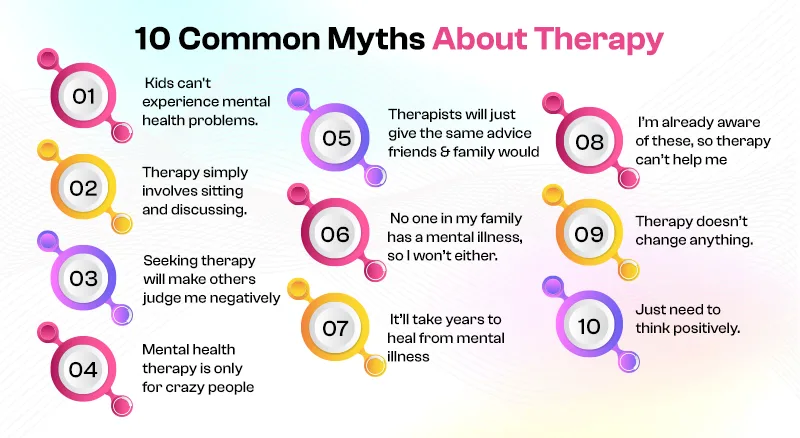
10 Common Myths About Therapy
Myth 1
Kids can’t experience mental health problems.
Truth: Just like adults, children navigate complex feelings and a wide range of emotional hurdles. Early support from adults and therapists is a gift that provides young people with an emotional toolkit, teaching them regulation skills that pave the way for a successful, balanced adulthood.
Myth 2
Therapy simply involves sitting and discussing.
Truth: While exploring emotions is a part of the process, many modalities like Cognitive Behavioral Therapy (CBT) or Solution-Focused Therapy are highly interactive. Your therapist will provide tools, challenge your perspectives, and help you set actionable goals. Clinicians are trained in experiential and monitor progress with assignments as part of the process.
Myth 3
Seeking therapy will make others judge me negatively
Truth: Choosing to prioritize your mental health is an act of high-level self-leadership. While some may still hold outdated views due to a lack of awareness, the truth is that seeking therapy demonstrates self-awareness and strength. The goal of therapy is to improve a person’s commitment to becoming the best version of themselves.
Myth 4
Mental health therapy is only for crazy people
Truth: This is perhaps the most damaging myth. Many people use it for personal growth, navigating career transitions, or simply improving their communication skills. You don’t need a clinical diagnosis to benefit from a professional perspective.
Myth 5
Therapists will just give the same advice friends and family would.
Truth: While friends and family offer essential emotional support, a therapist provides something different: evidence-based clinical strategy. A therapist is neutral, equipped with valuable resources, tools, and expertise who uses proven psychological frameworks to help you with your growth patterns and positive change without personal bias.
Myth 6
No one in my family has a mental illness, so I won’t either.
Truth: Just as someone might be the first in their family to develop a physical health condition, mental wellness is influenced by more than just genetics. Environment, life transitions, and emotion handling play huge roles. Being the first in your family to seek therapy will be a sign to enhance your quality of life.
Myth 7
It’ll take years to heal from mental illness
Truth: At the beginning of therapy, you and your therapist will usually establish goals and decide on a way to monitor your progress. Therapy concludes once these goals are met, and there isn’t a predetermined schedule for completion. The duration of therapy varies depending on the issues being addressed and the pace at which progress occurs.
Myth 8
I’m already aware of these, so therapy can’t help me
Truth:Therapy is an ongoing process, and the length of time spent in sessions can vary based on several factors. The patient has to be open and willing to engage in therapy, and the clinician has to gain trust and figure out suitable therapy with the patient. With various methods ranging from relaxation techniques to interactive problem-solving, there is always a new level of growth to discover.
Myth 9
Therapy doesn’t change anything.
Truth:It’s perfectly natural to feel this way if you’re new to therapeutic process. It is a versatile resource for personal growth, decision-making, and general support. It will change your perspective of living in a positive and better way.
Myth 10
Just need to think positively.
Truth:While a positive mindset helps, true recovery often requires a professional blend of therapy, lifestyle changes, and sometimes medical support. Seeking an expert is the most effective way to ensure your foundation is solid. It reflects bravery and a strong sense of self-awareness.
Reshaping Our Perspective on Mental Health
Reliable information is our most powerful tool in eliminating the barriers surrounding mental wellness. When we replace outdated misconceptions with evidence-based facts, we create an environment where seeking support is seen as a proactive and positive choice.
Through dedicated mental health awareness, we can cultivate a culture of mutual respect and genuine understanding. Therapy is a collaborative and evidence-based journey for personal growth and healing.
Healing Starts with Empower Therapy Wellness
By challenging the myths about therapy, we create a culture where seeking support is seen as a profound act of bravery. At Empower Therapy Wellness, we believe that education and awareness are the ultimate antidotes to stigma.
When we replace fear with understanding, we pave a smoother path for our friends, families, and ourselves to reach out when life gets heavy. Every time you share a truth, Empower Therapy Wellness offers a listening ear to help you build a community where everyone feels seen, heard, and supported.